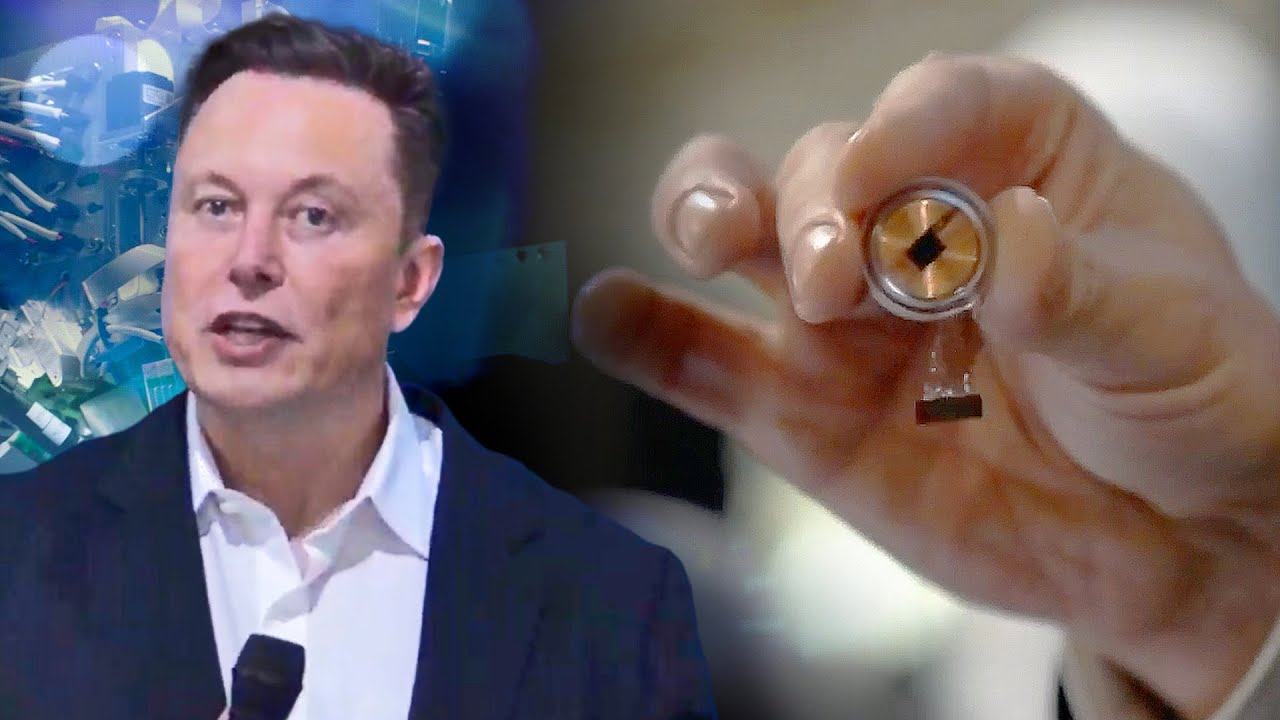
Elon Musk Innovates Revolutionary Chip to Detect and apprehend Social Media Scammers in Seconds…
1951 tot 2026: een zwaar moment voor PSV – legendarische ster…
Lees Meer 👇👇
https://sportfigur.com/2026/02/25/1951-tot-2026-een-zwaar-moment-voor-psv-legendarische-ster/
In an era where digital deception has become one of the fastest-growing global threats, tech entrepreneur Elon Musk has once again positioned himself at the center of innovation. The billionaire CEO, known for pushing boundaries in artificial intelligence, space exploration, and neural interface technology, has reportedly unveiled a groundbreaking microchip designed specifically to detect and prevent social media scams in real time. The innovation, described by insiders as a “behavioral intelligence processor,” could redefine online security and digital trust across platforms worldwide.
A Growing Global Crisis
Social media scams have surged dramatically over the past decade. From romance fraud and cryptocurrency schemes to identity theft and impersonation scams, billions of dollars are lost annually. Cybercriminal networks operate across borders, often using AI-powered bots and sophisticated phishing tactics to exploit users.
Traditional cybersecurity systems rely heavily on software-based detection models, which often react after fraudulent activity has already begun. Musk’s new chip aims to change that dynamic entirely—shifting from reactive protection to predictive prevention.
The Birth of the Scam-Detection Chip
Sources close to Musk’s innovation teams suggest that the chip was developed in collaboration with engineers connected to Neuralink and xAI. Drawing from neural network research and advanced AI modeling, the chip reportedly integrates machine learning algorithms directly into hardware architecture.
Unlike traditional processors that depend solely on software updates for threat detection, this chip embeds adaptive AI within its silicon structure. This allows it to:
Analyze communication patterns in real time
Detect abnormal linguistic behavior
Identify emotional manipulation tactics
Recognize coordinated bot activity
Flag suspicious transaction requests instantly
Because the intelligence operates at the hardware level, detection speeds are said to be significantly faster than cloud-based systems.
How It Works
The innovation centers on what Musk’s team calls “Behavioral Signature Mapping.” Instead of only scanning for known scam keywords, the chip studies patterns in communication—such as timing, repetition, tone shifts, metadata irregularities, and digital fingerprints.
For example, if a user receives a message claiming to be from a friend requesting urgent financial help, the chip evaluates:
Whether the writing style matches previous verified communications
Whether the account IP behavior aligns with historical data
Whether similar scam patterns are emerging globally
Whether the urgency pattern resembles known fraud scripts
If risk indicators cross a specific threshold, the chip triggers a warning before the user interacts further.
Integration with Social Platforms
Industry analysts speculate that the chip could eventually integrate directly with social platforms such as X (formerly Twitter), which Musk owns. If embedded into smartphones, laptops, or wearable devices, the chip could act as a universal scam detection shield regardless of the platform being used—whether messaging apps, online marketplaces, or email services.
The innovation may also leverage infrastructure similar to that used by Tesla for real-time data processing in autonomous vehicles, where milliseconds matter. In this context, milliseconds could mean preventing someone from transferring life savings to a scammer.
Hardware-Level Security: A New Frontier
What makes this development particularly significant is its hardware-level approach. Cybersecurity has long relied on software updates, which are vulnerable to delays, user negligence, and compatibility issues. Embedding scam detection directly into a chip means:
Protection begins at device startup
Malware has fewer pathways to bypass detection
AI models operate with lower latency
Offline protection becomes possible
This represents a major departure from traditional antivirus systems.
AI vs. AI: Fighting Bots with Smarter Bots
Modern scammers increasingly use AI tools to generate convincing fake identities, voice clones, and deepfake videos. Musk’s chip is reportedly trained on vast datasets of scam interactions, including AI-generated fraud attempts. This positions it as an AI system specifically designed to combat malicious AI.
The chip can reportedly identify:
Deepfake voice modulation inconsistencies
AI-generated text anomalies
Bot swarm coordination patterns
Fraudulent cryptocurrency wallet requests
By analyzing micro-patterns invisible to the human eye, the system aims to outpace even the most sophisticated scam networks.
Global Impact Potential
If rolled out at scale, the chip could significantly reduce financial losses linked to social media scams. Governments, banks, and fintech companies have expressed interest in hardware-integrated fraud detection, especially as digital payments expand rapidly in emerging markets.
Countries with high mobile-first populations—particularly across Africa and Southeast Asia—could benefit immensely. In regions where digital literacy varies widely, proactive scam detection built into devices could protect millions of users who may not recognize red flags.
Privacy Concerns and Ethical Debate
Despite excitement surrounding the innovation, privacy advocates have raised questions. A chip that analyzes communication patterns in real time must handle sensitive data responsibly. Musk’s teams have reportedly emphasized decentralized processing, meaning data analysis occurs locally on the device rather than being transmitted to central servers.
However, critics argue that:
Behavioral analysis could be misused
Governments might demand access
False positives could disrupt communication
Bias in training data might unfairly flag certain users
Balancing security and privacy will be crucial to the chip’s long-term acceptance.
Commercial Strategy and Future Deployment
Analysts predict Musk may introduce the chip in phases:
1. Integration into premium smartphones
2. Partnership with major social platforms
3. Enterprise security deployment
4. Optional implantation technology linked to neural interface research
The latter possibility has sparked speculation, given Musk’s involvement with Neuralink. While no official announcement suggests implantable scam detection, the convergence of neural and digital security technology remains an intriguing prospect.
Competition and Industry Response
Tech giants are unlikely to remain passive. Companies like Meta Platforms and Google already invest heavily in AI-driven content moderation and fraud detection. A hardware-level solution could pressure them to accelerate innovation or form partnerships.
Banks and fintech firms may also adopt similar chip-based models to enhance transaction authentication systems.
Economic Implications
If successful, Musk’s chip could create a new category in cybersecurity hardware. Semiconductor manufacturers may pivot toward AI-security-focused architectures. Insurance companies might offer lower digital fraud premiums for users with certified scam-detection hardware.
The ripple effect could extend to:
Reduced global fraud losses
Increased consumer confidence
Stronger digital economies
Expanded secure online commerce
Public Reaction
Public reaction has been mixed but largely optimistic. Many social media users welcome stronger protections, especially after experiencing phishing attempts or impersonation scams. Others remain cautious about giving any company deeper access to personal communication data.
Tech investors, however, view the development as potentially transformative. If the chip proves effective, it could become as standard in devices as antivirus software once was.
The Bigger Vision
Elon Musk has long spoken about the dangers of unchecked artificial intelligence. By creating AI tools specifically designed to protect users rather than exploit engagement metrics, this innovation may represent a philosophical shift in digital technology.
Instead of simply connecting people, platforms could actively defend them.
Conclusion
Elon Musk’s reported development of a scam-detection chip marks a bold step toward redefining online security. By embedding artificial intelligence directly into hardware, the innovation seeks to stay ahead of increasingly sophisticated social media fraud tactics. While privacy debates and technical challenges remain, the potential impact on global digital safety could be enormous.
Elon Musk Innovates Revolutionary Chip to Detect and apprehend Social Media Scammers in Seconds…Elon Musk Innovates Revolutionary Chip to Detect and apprehend Social Media Scammers in Seconds…Elon Musk Innovates Revolutionary Chip to Detect and apprehend Social Media Scammers in Seconds…
If successful, this chip may not only reduce scams but also restore a critical element often missing in today’s digital world—trust.
About the Author