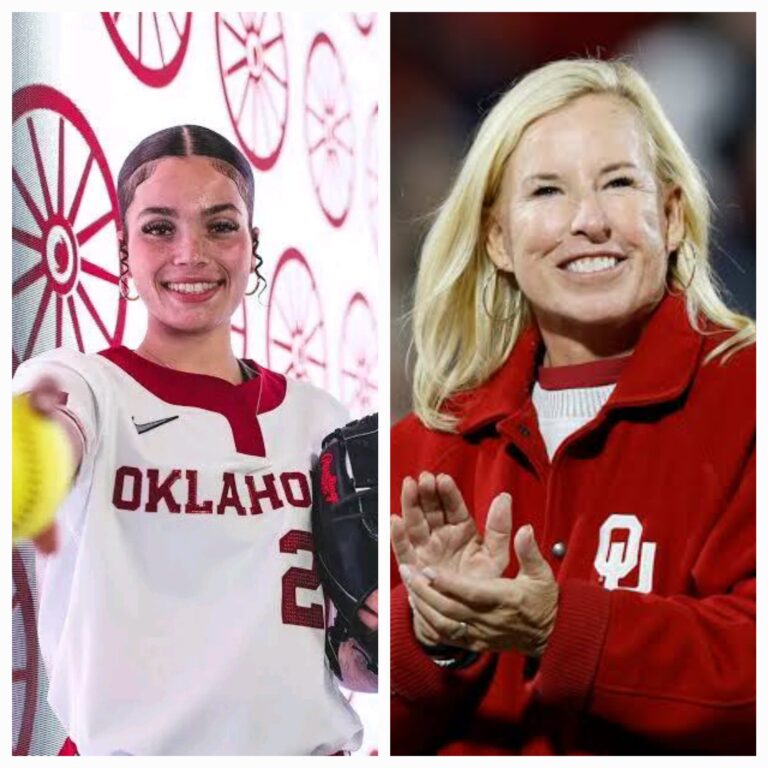
A Unique Recognition and Honor: Jennifer Rocha Becomes the First Assistant Coach to Be Honored with a Statue…
Jennifer Rocha Bags 2026 Best Softball Associate Coach of the Year Award, Becomes the First Oklahoman to…https://sportfigur.com/2026/02/10/8347-jennifer-rocha-bags-2026-best-softball-associate-coach-of-the-year-award-becomes-the-first-oklahoman-to/
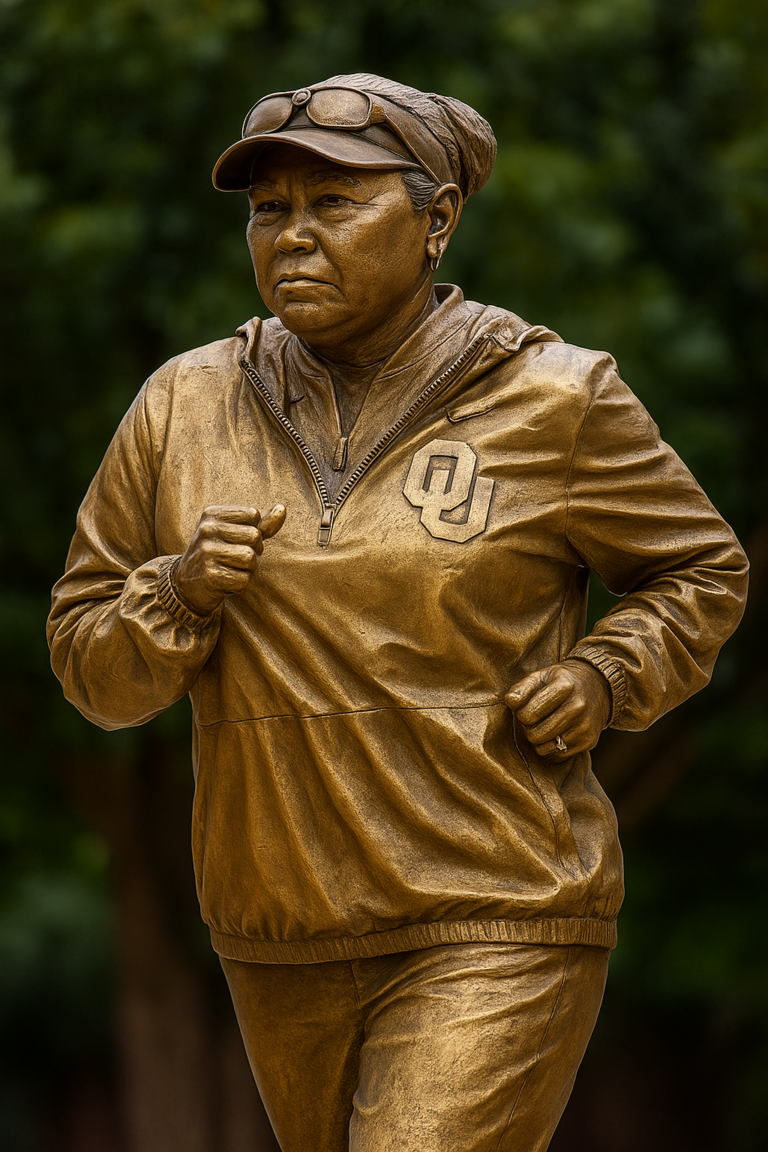
In the world of sports, statues are more than bronze and stone. They are symbols of immortality, silent storytellers that capture greatness and preserve it for generations. Traditionally, these monuments have been reserved for legendary athletes, iconic head coaches, or founders whose names echo through stadium corridors. Yet history occasionally bends, reshaping its own rules to recognize contributions that once lived in the shadows. Such a moment arrived when Jennifer Rocha became the first assistant coach to be honored with a statue — an unprecedented tribute that challenges conventions and celebrates the often-unseen architects of success.
The announcement reverberated far beyond the boundaries of the sporting community. It was not merely a recognition of a career but a redefinition of how excellence is measured. Assistant coaches have long been the strategists behind the strategist, the mentors behind the mentor, the stabilizing force amid triumph and turmoil. They influence culture, develop talent, and refine the microscopic details that separate victory from defeat. Yet their work rarely commands the spotlight. Rocha’s statue marks a cultural shift — a declaration that leadership is not confined to titles, and impact is not diminished by position.
Jennifer Rocha’s journey to this singular honor is rooted in persistence, intellect, and an unwavering dedication to athlete development. Those who have worked alongside her describe a professional defined by precision and empathy, someone capable of dissecting performance metrics while simultaneously nurturing the psychological resilience of her athletes. Her coaching philosophy blends technical mastery with human understanding — a combination that has proven transformative in high-pressure competitive environments.
Rocha’s early years in coaching were characterized by the same discipline she would later instill in others. Entering a profession where assistant coaches often navigate blurred lines between authority and support, she embraced the complexity of the role. Rather than viewing the position as secondary, she treated it as essential. Every training session, every film review, every quiet conversation with an athlete became an opportunity to elevate standards. Over time, her influence grew not through self-promotion but through consistent excellence.
Colleagues recount how Rocha became a stabilizing presence during critical transitions — coaching changes, roster rebuilds, injury setbacks. In moments when teams teetered between uncertainty and cohesion, she anchored the environment. Her ability to maintain continuity while adapting to new leadership styles earned widespread respect. Athletes trusted her not only as a tactician but as a confidante, someone who understood that performance is inseparable from well-being.
The significance of Rocha’s statue lies not solely in her achievements but in what it represents for the coaching profession. It acknowledges that success in modern sports is collaborative. Championships, records, and dynasties are rarely the product of a single visionary. They emerge from networks of expertise — analysts, trainers, medical staff, and coaches operating in harmony. Assistant coaches, in particular, occupy a unique space within this ecosystem. They are simultaneously leaders and listeners, innovators and implementers.
For decades, assistant coaches have shaped tactical evolutions, influenced recruitment strategies, and pioneered athlete-centered approaches. Many have left indelible marks on programs without ever becoming household names. Rocha’s recognition shines a long-overdue light on these contributions. It asks audiences to reconsider whose stories deserve to be cast in bronze.
The decision to commission a statue for an assistant coach was not without debate. Traditionalists questioned whether such honors should remain exclusive to head coaches or star players. Others argued that expanding the criteria risks diluting the symbolism of statues. Yet supporters countered that the very purpose of monuments is to reflect evolving values. If sports increasingly celebrate inclusivity, collaboration, and holistic leadership, then its symbols must evolve accordingly.
In Rocha’s case, the arguments for recognition proved compelling. Her career reflects not a single moment of brilliance but sustained excellence across years of service. She has been credited with developing athletes who went on to achieve extraordinary success, refining competitive strategies, and cultivating environments where individuals could thrive both personally and professionally. The statue, therefore, is not an anomaly but an affirmation.
Beyond professional circles, the tribute carries profound implications for representation and inspiration. Coaching remains a field where visibility shapes aspiration. Young professionals often model their ambitions on those they see celebrated. By honoring an assistant coach — and a woman in a leadership role — the monument broadens the spectrum of possibilities. It tells emerging coaches that influence matters as much as authority, and that transformative work can earn the highest recognition regardless of title.
For female coaches, Rocha’s statue resonates with particular power. Women have historically faced barriers to advancement, recognition, and equitable evaluation in coaching. While progress has accelerated, symbolic gestures remain crucial. Visibility dismantles stereotypes, and acknowledgment validates contributions. Rocha’s honor signals that leadership excellence transcends gendered expectations and hierarchical limitations.
The statue itself, meticulously designed, captures Rocha in a posture emblematic of her coaching ethos. Rather than depicting a triumphant celebration, the sculpture portrays her mid-instruction — focused, engaged, guiding. The choice is deliberate. It emphasizes process over spectacle, mentorship over glory. It immortalizes the act of coaching, not merely its outcomes.
Artists and designers involved in the project spoke of the challenge and privilege of translating Rocha’s presence into form. They sought to convey intensity without rigidity, authority without distance. Every detail — the stance, the expression, the subtle movement of fabric — was crafted to reflect authenticity. The result is a monument that feels alive, as though Rocha might step down at any moment to offer feedback or encouragement.
Public reaction to the unveiling underscored the emotional depth of the tribute. Athletes past and present gathered to witness the moment, many sharing stories of Rocha’s influence. Some recalled technical breakthroughs achieved under her guidance. Others spoke of personal growth fostered through her mentorship. Tears mingled with applause as the curtain fell, revealing a figure already etched into collective memory.
Speeches delivered during the ceremony highlighted a recurring theme: gratitude. Rocha’s colleagues expressed appreciation not only for her professional contributions but for her integrity and generosity. Athletes thanked her for believing in them during periods of doubt. Administrators acknowledged the stability and innovation she brought to programs navigating evolving competitive landscapes.
In her own remarks, Rocha deflected attention with characteristic humility. She framed the honor as a reflection of collective effort — a testament to athletes, staff, and mentors who shaped her journey. Yet even in modesty, her words carried weight. She spoke of the responsibility accompanying recognition, the importance of continuing to advocate for athlete welfare, coaching education, and inclusive leadership pathways.
The statue’s presence now serves as a daily reminder of values that extend beyond wins and losses. Visitors pause to read inscriptions detailing Rocha’s philosophy and contributions. Young athletes pose for photographs, absorbing the symbolism perhaps without fully articulating its significance. Coaches reflect on the recognition of a role often defined by tireless work behind the scenes.
Critically, the monument invites broader conversations about how sports define greatness. Is greatness confined to those who command visibility, or does it reside equally in those who cultivate excellence in others? Rocha’s tribute suggests the latter. It celebrates the multiplier effect of mentorship — the idea that empowering others can be as consequential as personal achievement.
The ripple effects of this recognition may reshape how institutions evaluate contributions. Awards committees, hall-of-fame panels, and leadership bodies may increasingly consider assistant coaches whose impact rivals that of more visible figures. Rocha’s statue becomes not only a tribute but a precedent.
Yet beyond institutional implications, the story is profoundly human. It is about dedication sustained through years when recognition was uncertain. It is about influence measured not in headlines but in transformed careers and lives. It is about redefining what it means to leave a legacy.
Jennifer Rocha’s statue stands as a bridge between past traditions and future possibilities. It honors a career while expanding a narrative. It immortalizes not a singular hero but a form of leadership grounded in collaboration, intellect, and empathy. In doing so, it reshapes the symbolic landscape of sports.
Statues endure because they speak across time. Long after ceremonies fade and debates quiet, they remain — witnesses to history, catalysts for reflection. Rocha’s monument will tell future generations that excellence wears many faces, that leadership is multifaceted, and that transformative impact can emerge from any position within a team.
In an era increasingly defined by collective achievement and evolving definitions of success, Jennifer Rocha’s unprecedented honor feels both radical and inevitable. Radical because it breaks with tradition. Inevitable because it recognizes truths long understood by those within the profession: assistant coaches are not supporting characters in the story of greatness — they are co-authors.
A Unique Recognition and Honor: Jennifer Rocha Becomes the First Assistant Coach to Be Honored with a Statue…A Unique Recognition and Honor: Jennifer Rocha Becomes the First Assistant Coach to Be Honored with a Statue…A Unique Recognition and Honor: Jennifer Rocha Becomes the First Assistant Coach to Be Honored with a Statue…
As sunlight catches the bronze contours of Rocha’s likeness, one message becomes unmistakable. Recognition, when expanded thoughtfully, does not dilute honor — it deepens it. And in celebrating Jennifer Rocha, the sporting world has not merely erected a statue; it has elevated an entire dimension of leadership that shapes champions, cultures, and futures.
About the Author